
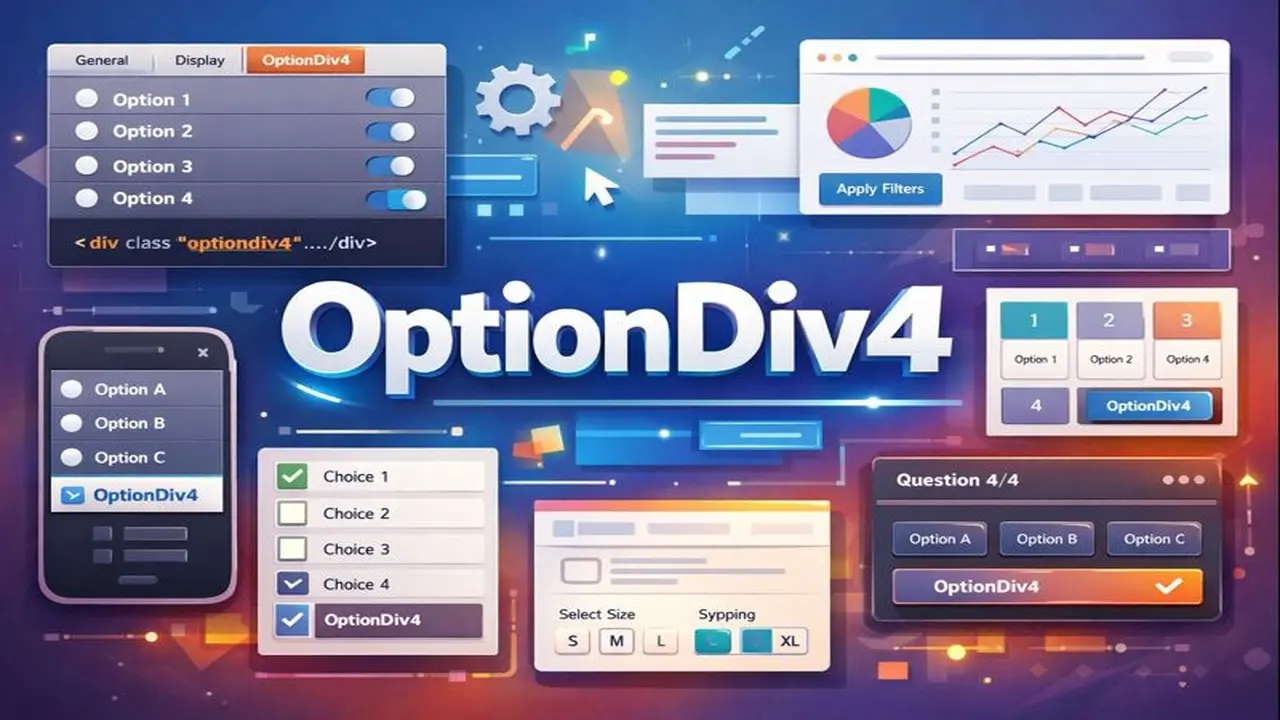
The term (Optiondiv4) has been appearing more frequently across digital discussions, especially in web development, interface design, and content organization contexts. While it is not a formally standardized technical term, its growing usage reflects a broader shift toward structured, modular, and user-focused digital experiences. Understanding what Optiondiv4 represents requires looking beyond a single definition and exploring how it is interpreted and applied in real-world scenarios.
At its core, Optiondiv4 is commonly used as a label or conceptual identifier for a structured group of options within a digital interface. The word itself suggests a combination of “option” and “division,” with the number often indicating sequence, hierarchy, or a specific grouping within a larger system. Rather than being a rigid technology or tool, Optiondiv4 acts as a practical naming convention or conceptual framework that helps developers, designers, and content creators organize choices more effectively.
This flexibility is precisely why the term has gained attention. In a digital environment where clarity, usability, and scalability are essential, having a recognizable way to describe structured option blocks is valuable. Optiondiv4 fits naturally into that role.
The Origins and Conceptual Background of Optiondiv4
Quick Bio
| Box | Information |
|---|---|
| 1 | Keyword Name: Optiondiv4 |
| 2 | Type: Informational / Conceptual Term |
| 3 | Primary Field: Web Development & UI/UX Design |
| 4 | Core Meaning: Structured division used to group selectable options |
| 5 | Common Usage: Dashboards, settings panels, interactive interfaces |
| 6 | Technical Nature: Conceptual naming convention, not a formal standard |
| 7 | Primary Purpose: Improve organization and clarity of digital options |
| 8 | Audience: Developers, designers, content strategists |
| 9 | Design Approach: Modular and user-focused layout structure |
| 10 | SEO Relevance: Supports better content structure and navigation |
| 11 | Scalability: Easy to expand and maintain in growing projects |
| 12 | Learning Level: Beginner to Intermediate |
| 13 | Future Scope: High relevance in modern and scalable web interfaces |
The emergence of Optiondiv4 is closely tied to the evolution of modern web interfaces. As websites and applications became more complex, developers needed clearer ways to label and manage different sections of options, especially within dashboards, settings pages, and interactive tools. Traditional naming methods were often inconsistent, leading to confusion in collaborative environments.
Optiondiv4 appears to have originated as a practical internal label rather than a public-facing concept. Teams began using it to describe a specific option container, often the fourth in a sequence, that held related choices or actions. Over time, the term moved beyond internal documentation and found its way into public discussions, tutorials, and conceptual explanations.
What makes this evolution interesting is that Optiondiv4 does not belong to a single discipline. It exists at the intersection of development logic, interface design, and content structure. This cross-disciplinary nature allows it to be adapted easily, which explains why it is interpreted slightly differently depending on the context.
Optiondiv4 in Web Development Environments
In web development, Optiondiv4 is most often associated with structured layout components. Developers frequently break down interfaces into reusable blocks, and naming these blocks clearly is essential for maintainability. Optiondiv4 typically refers to a specific container that holds a set of selectable options, buttons, or controls.
This container is usually part of a larger hierarchy. For example, a settings page might include multiple option divisions, each responsible for a different category. Optiondiv4 would then represent one of these categories, clearly separated from others to avoid overlap or confusion.
The value here lies in predictability. When a developer encounters Optiondiv4 in a codebase, they can reasonably expect it to contain options related to a defined function. This predictability improves collaboration, reduces errors, and speeds up development cycles.
The Role of Optiondiv4 in UI and UX Design
From a user interface and user experience perspective, Optiondiv4 plays a subtle but important role. Users interact with interfaces through choices, and the way those choices are grouped significantly affects usability. Poorly organized options can overwhelm users, while well-structured divisions create a sense of control and clarity.
Optiondiv4 helps designers conceptualize these divisions. By thinking in terms of distinct option containers, designers can ensure that each section serves a clear purpose. The “4” in Optiondiv4 often implies progression or prioritization, which can guide layout decisions.
For example, earlier option divisions may handle general settings, while Optiondiv4 might focus on advanced or specialized features. This layered approach aligns with natural user behavior, where people prefer to start with basic options before moving into more detailed configurations.
How Optiondiv4 Supports Modular Design Principles
Modular design is one of the defining principles of modern digital products. Instead of building monolithic systems, developers and designers create independent modules that can be reused, modified, or removed without affecting the entire structure. Optiondiv4 fits seamlessly into this philosophy.
As a modular option container, Optiondiv4 can be developed, tested, and refined independently. This separation reduces complexity and makes it easier to scale applications over time. If new features are introduced, additional option divisions can be added without disrupting existing ones.
This modularity also benefits long-term maintenance. When updates are required, teams can focus on a specific option division rather than navigating an entire interface. In this way, Optiondiv4 contributes indirectly to more stable and adaptable digital products.
Practical Use Cases of Optiondiv4 in Real Projects
Optiondiv4 is not limited to theoretical discussions; it appears in many practical scenarios. In dashboards, it may represent a specific control panel dedicated to analytics filters or user preferences. In content management systems, it could define a block of formatting or publishing options.
E-commerce platforms also benefit from this structure. Product configuration pages often require multiple layers of choices, and clearly separated option divisions improve conversion rates by reducing confusion. Optiondiv4 might handle shipping preferences, customization features, or advanced pricing rules.
Educational platforms, productivity tools, and internal enterprise software all use similar patterns. While the label itself may vary, the underlying concept represented by Optiondiv4 remains consistent: structured, purposeful grouping of options.
Conceptual Interpretations Beyond Development
Interestingly, Optiondiv4 has also been interpreted as a conceptual framework beyond strict technical usage. Some professionals use it as a mental model for organizing decisions or processes. In this sense, Optiondiv4 represents a stage or category within a broader decision-making structure.
For example, when mapping out workflows, a team might identify several option divisions corresponding to different phases. Optiondiv4 could represent refinement, validation, or optimization stages. Although abstract, this usage highlights the adaptability of the concept.
This broader interpretation reinforces the idea that Optiondiv4 is not about rigid rules but about clarity and organization. Whether applied to code, design, or planning, the underlying principle remains the same.
Advantages of Using Structured Option Divisions Like Optiondiv4
One of the most significant advantages of Optiondiv4 is improved clarity. Clear option divisions reduce cognitive load for users and simplify development for teams. When options are grouped logically, users can find what they need faster and with less frustration.
Another advantage is consistency. Using a recognizable structure across an application creates familiarity. Users learn how the interface works and can navigate it more confidently. For development teams, consistency reduces onboarding time and minimizes misunderstandings.
Optiondiv4 also supports scalability. As projects grow, having predefined option divisions makes it easier to expand functionality without redesigning the entire system. This foresight can save significant time and resources over the lifespan of a product.
Potential Limitations and Misunderstandings
Despite its benefits, Optiondiv4 is not without limitations. One common issue is ambiguity. Because the term is not standardized, its meaning can vary between teams or projects. Without clear documentation, new contributors may misinterpret its purpose.
Overuse is another risk. Creating too many option divisions can fragment interfaces and confuse users. Optiondiv4 should be used thoughtfully, ensuring that each division genuinely adds value rather than complexity.
There is also the challenge of naming conventions. If Optiondiv4 is used purely as an internal label, it should not leak into user-facing content where it might appear technical or unclear. Maintaining a separation between internal structure and external presentation is essential.
Best Practices for Implementing Optiondiv4 Effectively
To use Optiondiv4 effectively, clarity should always come first. Each option division must have a clearly defined purpose that aligns with user needs. This purpose should be documented so that all team members share the same understanding.
Consistency is equally important. If Optiondiv4 follows certain design or structural patterns, those patterns should be applied across similar divisions. This consistency improves both usability and maintainability.
Testing is another key practice. User testing can reveal whether option divisions are intuitive or confusing. Feedback gathered at this stage can guide refinements and ensure that Optiondiv4 genuinely enhances the user experience.
Optiondiv4 and Its Relationship With SEO and Content Structure
Although Optiondiv4 is primarily a structural concept, it indirectly influences search optimization. Well-organized interfaces often correspond to well-organized content. Clear divisions make it easier to present information logically, which benefits readability and engagement.
For content-driven platforms, structured option divisions can guide users toward relevant sections, increasing time spent on site and reducing bounce rates. These behavioral signals are valuable for long-term performance.
From an internal perspective, Optiondiv4 encourages disciplined content organization. When content options are grouped logically, updates become more efficient, and errors are less likely to occur.
The Future Relevance of Optiondiv4 in Digital Design
As digital products continue to evolve, the need for clear structure will only increase. Interfaces are becoming more dynamic, personalized, and feature-rich. Concepts like Optiondiv4 provide a foundation for managing this complexity.
While the label itself may change or be replaced, the principle it represents is likely to remain relevant. Structured option divisions are a fundamental part of user-centered design, and their importance will grow alongside technological advancement.
Future tools may automate or abstract these structures further, but the underlying logic will still reflect the ideas embodied by Optiondiv4. In that sense, understanding this concept prepares professionals for more advanced design and development challenges.
Why Optiondiv4 Is Worth Understanding
Optiondiv4 is more than a technical label; it is a reflection of how modern digital systems are organized. By focusing on structured options, clarity, and modularity, it addresses some of the most common challenges in interface design and development.
Whether you are a developer seeking cleaner code, a designer aiming for better usability, or a content strategist organizing complex information, the ideas behind Optiondiv4 offer practical value. Understanding these ideas helps bridge the gap between technical structure and human experience.
Conclusion The Practical Value of Optiondiv4
In a digital landscape defined by choice and complexity, structure is essential. Optiondiv4 represents an approach to organizing options that balances flexibility with clarity. Its growing visibility highlights a shared need across industries for better organization and communication within digital systems.
By applying the principles associated with Optiondiv4 thoughtfully, teams can create interfaces and workflows that are easier to use, maintain, and scale. While the term itself may evolve, the mindset it encourages is likely to remain a cornerstone of effective digital design.
Frequently Asked Questions
1. What does Optiondiv4 generally represent?
Optiondiv4 usually represents a structured division of options within an interface or system, often indicating a specific grouping or sequence.
2. Is Optiondiv4 a formal technical standard?
No, it is not a formal standard. It is a commonly used label or concept that varies depending on context and implementation.
3. Where is Optiondiv4 most commonly used?
It is most commonly associated with web development, UI design, dashboards, settings pages, and structured digital workflows.
4. Can Optiondiv4 be applied outside of web design?
Yes, it can also be used conceptually to organize decisions, processes, or stages in planning and workflow management.
5. Why is Optiondiv4 useful for modern digital projects?
It promotes clarity, modularity, and consistency, making digital systems easier to use, maintain, and scale over time.
Read More: Farewell To Life on Earth Exploring Humanity’s Future Survival and Cosmic Responsibility
About the Author