The AFC West is one of the most competitive divisions in football, and every season, the clashes between the Denver Broncos and the Los Angeles Chargers create major headlines. These two teams share a fierce history full of close finishes, outstanding individual displays, and dramatic shifts in momentum that keep this rivalry alive and intense. When fans search for breakdowns or insights, the focus often goes beyond just final scores. What truly matters are the Denver broncos vs chargers match player stats—the detailed numbers that reveal who performed, which strategies worked, and how the outcome unfolded.
This in-depth article examines recent meetings between these two franchises, highlighting offensive, defensive, and special teams contributions. It brings all relevant performance metrics together to help you understand how key players influenced the game. From quarterback duels to rushing efficiency, receiving impact, defensive pressure, and coaching adjustments, everything is covered in detail. If you are looking for complete clarity on how each team’s best players shaped the matchup, the following analysis is designed just for you.
Understanding the Rivalry Through Key Statistics
Before diving into individual numbers, it’s important to understand the broader context behind the denver broncos vs chargers match player stats. These two teams have met more than 130 times, and their long-standing competition has produced memorable battles. Historically, Denver has held the advantage, especially in home games played in high altitude. The Chargers, on the other hand, have enjoyed strong stretches fueled by elite quarterback play and explosive offensive schemes.
Recent matchups reflect a closely contested rivalry where neither team dominates for long. Each game features momentum swings, last-minute drives, and performances that shift the balance unexpectedly. This is why player statistics become crucial—they reveal deeper truths about how each side executes under pressure.
Quarterback Comparison Herbert vs Nix
Justin Herbert’s Consistent Production
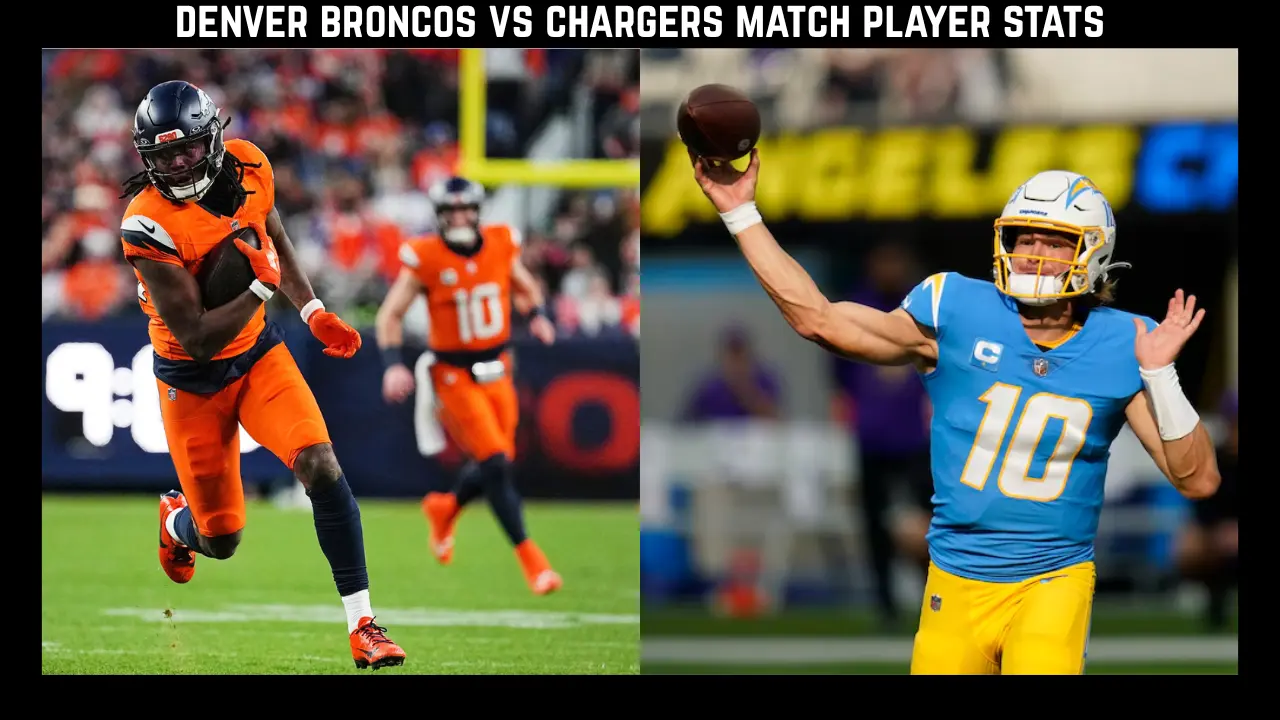
In recent meetings, Justin Herbert has been the focal point of the Chargers’ offense. His arm strength, poise, and ability to attack the Broncos secondary make him one of the most influential figures in all denver broncos vs chargers match player stats discussions. Herbert routinely posts high passing yard totals, often exceeding the 280–300 yard mark. His accuracy in tight windows and ability to maintain composure under pass rush pressure set the tone for the Chargers’ offensive rhythm.
In one of the most recent matchups, Herbert delivered 300 passing yards with a touchdown, maintaining efficiency even when Denver’s front seven attempted to collapse the pocket. His chemistry with Keenan Allen and emerging receivers like Quentin Johnston has kept the Chargers’ air attack dynamic and unpredictable.
Bo Nix’s Growth and Adaptability
On the Broncos’ side, rookie quarterback Bo Nix has shown resilience and steady progression. His performance in the most recent Broncos-Chargers clash included more than 150 passing yards and a touchdown, plus valuable rushing contributions. While Denver’s offense had a slower start, Nix displayed smart field vision, mobility, and the ability to keep drives alive in high-pressure moments.
What stands out in the denver broncos vs chargers match player stats involving Nix is his dual-threat capability. Even when facing a challenging pass rush, he added meaningful yardage on the ground and kept the Chargers’ defense guessing. His connection with receivers—especially Courtland Sutton—elevated Denver’s offensive production in pivotal drives.
Ground Game Rushing Impact from Both Sides
Chargers Rushing Attack
The Chargers’ backfield showed balance and explosiveness, with running backs like Omarion Hampton and Gus Edwards contributing significantly in recent games. Hampton recorded around 70 rushing yards with a touchdown, displaying excellent burst and field awareness. Edwards, in earlier matchups, posted multiple touchdowns and showcased powerful interior running that consistently punished the Broncos’ linebackers.
The denver broncos vs chargers match player stats repeatedly highlight how critical the Chargers’ run game becomes—especially in red zone situations. Early success on the ground opens up the play-action passing scheme for Herbert, allowing the Chargers to maintain control of the pace and flow of the game.
Broncos Rushing Performance
J.K. Dobbins delivered one of the standout performances on the Denver side, rushing for more than 80 yards and scoring a key touchdown. His agility and ability to cut through defensive gaps gave the Broncos valuable momentum. The balance created by Dobbins helped the Broncos keep drives sustainable, especially when Nix faced pressure in the pocket.
The Broncos have often relied on physical ground-and-pound football, and the latest match statistics reflect that identity. Their run game has been essential in winning time-of-possession battles and keeping Herbert off the field.
Receiving Units Who Made the Biggest Impact
Chargers Wide Receivers
Keenan Allen remains one of the most reliable route-runners in the league, recording 65 yards on seven receptions along with a touchdown in the most recent contest. His timing with Herbert is nearly perfect, and his ability to find soft zones in coverage remains unmatched.
Quentin Johnston delivered one of his best performances with close to 90 receiving yards. His size, speed, and catch radius have added an entirely new dimension to the Chargers’ passing attack. Johnston’s presence forces Denver’s secondary to distribute attention more widely, which often creates opportunities for Allen and tight ends to exploit mismatches.
These receiving efforts form a big part of the denver broncos vs chargers match player stats, showcasing how effective the Chargers are at stretching defenses vertically and horizontally.
Broncos Receiving Core
Courtland Sutton was unquestionably the offensive highlight for Denver. With six receptions totaling around 118 yards and a touchdown, Sutton consistently beat coverage and provided Nix with a dependable target. His physicality, contested-catch ability, and deep-ball skills made him the most dangerous player on the Broncos’ offense.
Denver’s receivers complemented Sutton’s performance with shorter route options and quick passes to counteract the Chargers’ pass rush. Their contributions, while modest in comparison, played meaningful roles in sustaining drives.
Defensive Highlights Pressure Coverage and Key Stops
Broncos Defensive Standouts
Denver’s defense worked relentlessly to contain the Chargers’ explosive offense. Patrick Surtain II, Riley Moss, and Alex Singleton played every defensive snap, showcasing endurance and commitment. Their coverage efforts limited big plays and forced the Chargers into multiple long-yardage situations.
The Broncos defensive front also applied consistent pressure on Herbert, making him uncomfortable in the pocket during crucial moments. Although Herbert still produced strong numbers, Denver’s defensive work kept them within striking distance throughout the game.
Chargers Defensive Presence
Los Angeles brought aggressive pressure packages that disrupted Denver’s early offensive rhythm. Their pass rush forced Nix to roll out repeatedly, testing his decision-making under stress. Strong linebacker play and disciplined tackling prevented Denver from gaining easy yards after contact.
The Chargers’ red zone defense also stood out in the denver broncos vs chargers match player stats, as they limited Denver’s scoring opportunities and forced stalled drives to end in field goal attempts instead of touchdowns.
Special Teams The Hidden Advantage
Field position often defines who controls the tempo of AFC West matchups. Denver’s kicker, Wil Lutz, delivered accurate field goals from long distances, including kicks from 41 and 55 yards. These special teams contributions kept Denver competitive during key stretches of the game.
The Chargers responded with strong kickoff returns and consistent punting that pinned the Broncos deep in their own territory, leading to long drives under pressure.
Coaching Adjustments and Game Management
Both teams made major in-game adjustments that influenced the flow and outcome. The Chargers adapted their pass protection schemes to counter Denver’s pressure, while the Broncos shifted toward quicker passing plays to help Nix regain rhythm. Clock management became essential in the fourth quarter, where the Chargers executed a final drive that set up a game-winning field goal.
These coaching decisions are reflected indirectly throughout the denver broncos vs chargers match player stats, as the numbers reveal moments where momentum shifted because of strategic changes.
Final Thoughts What the Stats Truly Reveal
The Broncos-Chargers rivalry continues to deliver thrilling matchups shaped by standout individual performances and tightly contested drives. The denver broncos vs chargers match player stats from recent meetings highlight a balance of strong quarterback play, decisive rushing attacks, dynamic receiving units, and resilient defensive efforts. Each game provides new insights into how these two teams evolve and adapt, ensuring their future battles remain must-watch football.
This detailed breakdown brings together every major performance metric to give fans, analysts, and writers a clear and complete understanding of how the most recent encounters unfolded. Whether you follow Denver or Los Angeles, one thing is clear: this rivalry is far from finished, and the stats only make it more exciting.
FAQs
1. Who had the strongest performance based on the denver broncos vs chargers match player stats?
Courtland Sutton and Justin Herbert delivered top-tier performances, with Sutton dominating the receiving game and Herbert leading the Chargers with high passing efficiency.
2. How did the running backs influence the game?
J.K. Dobbins, Omarion Hampton, and Gus Edwards all contributed significantly, with each producing important rushing yards and touchdowns that shaped scoring momentum.
3. What role did defense play in the matchup?
Both teams’ defenses made key plays. Denver relied on strong coverage and pressure, while the Chargers disrupted Denver’s early rhythm with aggressive blitzing.
4. Which quarterback performed better in the matchup?
Herbert posted higher passing yardage and controlled the Chargers offense smoothly, while Bo Nix showed balanced dual-threat ability and resilience throughout the game.
5. Why are denver broncos vs chargers match player stats important for analysis?
They offer deeper insights into performance, strategy, and corrections needed for future games, helping fans and analysts understand how each team executed on both sides of the ball.
About the Author