
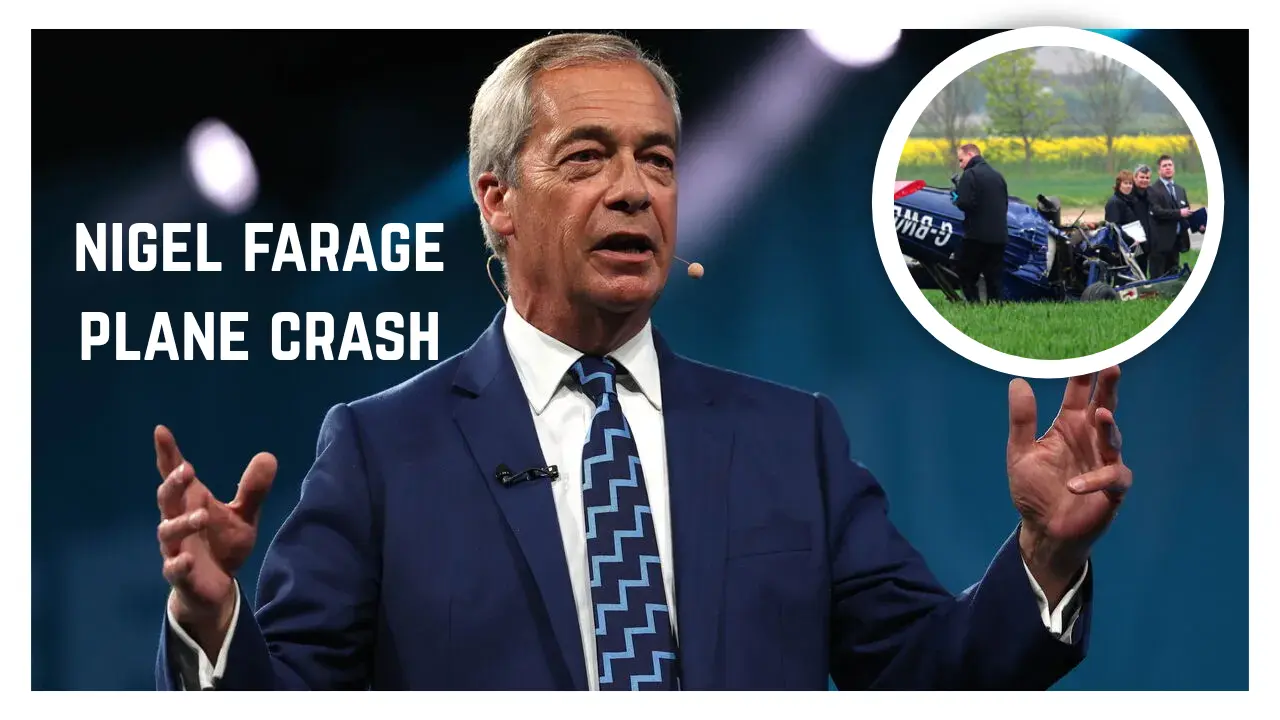
The Nigel Farage plane crash remains one of the most shocking and unforgettable moments in British politics. On May 6, 2010, during the UK general election, a campaign flight meant to promote UKIP’s message turned into a near-fatal disaster. The aircraft carrying Nigel Farage crashed shortly after takeoff, leaving him with serious injuries. What followed was a story of survival, strength, and transformation. This event not only changed his life but also reshaped how the public viewed one of the most controversial figures in UK politics.
Quick Summary
- Event: Nigel Farage plane crash during the 2010 UK general election
- Date: May 6, 2010
- Location: Hinton-in-the-Hedges Airfield, Northamptonshire, England
- Aircraft: PZL-104 Wilga light aircraft
- Cause: “Vote UKIP” banner tangled around the tailplane
- Injuries: Punctured lung, broken ribs, and spinal injuries
- Pilot: Justin Adams – survived but later faced personal tragedy
- Outcome: Farage survived and returned to politics
- Legacy: Became a defining moment symbolizing resilience and courage
The Day of the Nigel Farage Plane Crash
On election morning, Nigel Farage set out to make a statement. His campaign team arranged a banner flight promoting his UK Independence Party message across the skies. The idea was bold, but it turned disastrous within minutes. Shortly after takeoff, the “Vote UKIP” banner became tangled in the aircraft’s tailplane, causing the small plane to spiral out of control.
The plane crashed into a nearby field, flipping upside down on impact. Witnesses rushed to help, and emergency services arrived swiftly to pull Farage and the pilot from the wreckage. The Nigel Farage plane crash quickly made international headlines, turning an ordinary campaign day into a story of survival and shock.
Investigation into the Nigel Farage Plane Crash
After the crash, the Air Accidents Investigation Branch (AAIB) launched a full inquiry. Their report revealed that the banner cable had wrapped tightly around the tailplane, completely disabling the aircraft’s control surfaces. The pilot had only seconds to react but couldn’t regain control.
The investigation also found that the aircraft model, a PZL-104 Wilga, was not designed for heavy banner towing. This raised questions about campaign safety practices and the risks of aerial publicity stunts. The Nigel Farage plane crash became a cautionary tale in both aviation and political circles.
Nigel Farage’s Injuries and Miraculous Recovery
Nigel Farage suffered severe injuries that could have ended his life. These included:
- A punctured lung from the impact
- Several broken ribs and a fractured sternum
- Spinal damage and internal bleeding
Despite the gravity of his injuries, Farage recovered astonishingly fast. Doctors credited his survival to sheer luck and the quick response of rescue teams. Remarkably, within weeks, he was back on television — still bruised, but full of his trademark humor and defiance. The Nigel Farage plane crash became a symbol of his resilience, adding a new dimension to his public persona.
The Pilot’s Struggles and Tragic End
The pilot, Justin Adams, also survived the crash but endured lasting trauma and physical injuries. Reports later revealed he faced emotional and financial difficulties in the years that followed. Tragically, he was found dead in 2013 in what was ruled a suicide.
Nigel Farage later expressed deep sorrow, calling Adams “a brave man who did everything possible to save us.” This heartbreaking aftermath gave the Nigel Farage plane crash a human and emotional dimension that went far beyond politics.
Media Reaction and Public Sympathy
News of the crash spread like wildfire across British and international media. Images of the destroyed plane and Farage’s injured face dominated headlines. For days, television networks replayed footage from the crash site.
Public reactions were mixed but largely sympathetic. Supporters praised his courage, while critics questioned why such a risky stunt was ever attempted. Nevertheless, the Nigel Farage plane crash softened his image — transforming him from a combative political figure into a symbol of endurance and luck.
Political Impact and Legacy
In the years that followed, the Nigel Farage plane crash became part of his political identity. It humanized him and reinforced his image as a determined, fearless figure. Even during heated Brexit debates years later, Farage referenced the crash as a reminder of his resilience and perspective on life.
The event added a sense of humility to his public persona, making him appear more relatable to everyday voters. For many, his survival story was symbolic — proof that no setback, political or personal, could keep him grounded for long.
Lessons from the Nigel Farage Plane Crash
The incident left the aviation and political communities with key lessons:
- Safety Over Stunts: Campaign flights and publicity events must always prioritize safety.
- Proper Risk Assessment: All flight operations should be evaluated by professionals.
- Qualified Pilots: Only certified pilots should handle banner-towing flights.
- Preparedness: Emergency response readiness is crucial during campaign events.
These lessons led to tighter aviation rules for political campaigns, ensuring similar incidents could be prevented in the future. The Symbolism of Survival
Even more than a decade later, the Nigel Farage plane crash remains etched in public memory. It symbolizes both human fragility and endurance. Farage’s survival became a defining image of strength — a man literally rising from the wreckage.
For the media and public alike, it turned into a story of redemption, courage, and the unpredictable nature of life in politics.
Image Suggestions
- Crash Wreckage Scene – Alt text: “Wreckage of the Nigel Farage plane crash in a Northamptonshire field.”
- Farage Hospital Image – Alt text: “Nigel Farage recovering from his injuries after the 2010 plane crash.”
- Campaign Banner Image – Alt text: “Vote UKIP banner used during the 2010 Nigel Farage campaign flight.”
Internal Linking Suggestions
- Link to a Nigel Farage Biography page for deeper insight into his life and political journey.
- Link to UKIP 2010 Election History for campaign background.
- Link to Aviation Safety Improvements in UK Politics for related content.
External Authoritative Sources
- The Guardian – UKIP’s Nigel Farage injured in plane crash
- The Telegraph – After the plane crash, I lit a cigarette
- Independent – The Story Behind Nigel Farage’s Plane Crash
Frequently Asked Questions (FAQs)
When did the Nigel Farage plane crash happen?
The crash occurred on May 6, 2010, during the UK general election campaign.
What caused the Nigel Farage plane crash?
A “Vote UKIP” banner became entangled in the aircraft’s tailplane, causing a loss of control.
Was Nigel Farage seriously injured?
Yes. He sustained a punctured lung, broken ribs, and spinal injuries but made a full recovery.
Did the pilot survive the crash?
Yes, but he later faced emotional and financial struggles before his tragic death in 2013.
How did the crash affect Nigel Farage’s political career?
It increased his visibility and softened his public image, turning him into a symbol of courage and survival.
Conclusion
The Nigel Farage plane crash remains one of the most dramatic and symbolic events in recent British political history. What began as a campaign stunt turned into a fight for survival. Farage’s miraculous recovery not only saved his life but also reshaped his political identity.
This event continues to remind us that risk and reward often go hand in hand in politics. For Farage, the crash was both a tragedy and a turning point — proving that resilience can transform even the darkest moments into defining chapters of leadership.
About the Author