
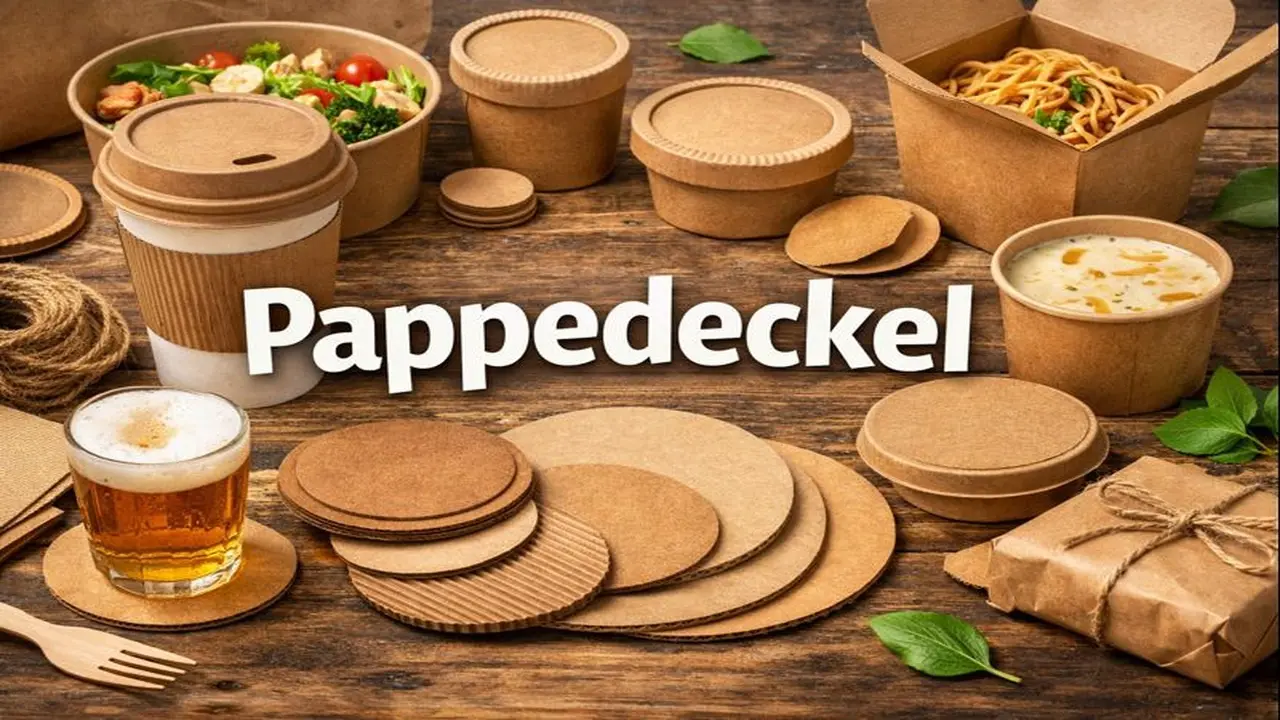
The word (Pappedeckel) comes from the German language and is formed by combining two simple terms: “Pappe,” meaning cardboard or thick paper, and “Deckel,” meaning lid or cover. When brought together, the meaning becomes clear and practical: a cardboard lid or cover made from paperboard material. While the term may sound technical or foreign at first, the object itself is extremely familiar. Most people encounter it daily without realizing there is a specific name for it.
In everyday life, this item appears as a cover on takeaway food containers, a protective disc in packaging, or even as a coaster under a beverage. The simplicity of its design is what makes it so versatile. It is lightweight, inexpensive, and easy to produce, yet strong enough to serve a protective function. Over time, this modest cardboard component has become a symbol of practical design and environmental awareness.
Understanding the meaning is important because it helps explain why the concept has gained attention beyond German-speaking regions. As global conversations around sustainability and responsible packaging grow stronger, simple solutions like this are increasingly valued.
The Origins and Cultural Context of the Term
Quick Bio
| No. | Topic | Quick Information |
|---|---|---|
| 1 | Keyword Focus | pappedeckel |
| 2 | Origin of Term | Derived from the German words for cardboard and lid |
| 3 | Basic Meaning | A cardboard lid or cover made from thick paperboard |
| 4 | Common Material | Recycled paperboard or cardboard |
| 5 | Primary Use | Covering food containers, cups, and packaging items |
| 6 | Popular Industries | Food service, packaging, hospitality, logistics |
| 7 | Environmental Impact | Biodegradable and recyclable |
| 8 | Sustainability Role | Helps reduce plastic usage and waste |
| 9 | Customization Options | Printable with logos, text, and designs |
| 10 | Cost Efficiency | Affordable compared to plastic alternatives |
| 11 | Consumer Perception | Seen as eco-friendly and responsible |
| 12 | Future Relevance | Strong demand due to sustainability trends |
The cultural roots of pappedeckel lie in Germany’s long history of paper production and recycling. Germany has been a leader in waste separation, recycling systems, and responsible material use for decades. Cardboard and paperboard products have traditionally been favored for their recyclability and lower environmental impact compared to plastic.
The term itself reflects a mindset of function over form. Rather than using a complex or branded name, the word directly describes what the object does. This practical naming approach is common in German and aligns well with industrial design principles. Over time, the word has been adopted in broader contexts, especially in discussions about packaging materials and eco-friendly alternatives.
As international businesses and sustainability professionals exchange ideas, the concept behind the word travels even if the language changes. Today, the idea represented by this term is relevant across industries and borders.
Common Uses of Cardboard Lids and Covers in Daily Life
One of the reasons this cardboard solution has remained popular is its wide range of applications. It is not limited to one industry or purpose. Instead, it adapts easily to different needs.
In food service, cardboard lids are commonly used for hot and cold beverages, takeaway soups, and desserts. They help retain heat, prevent spills, and provide a hygienic barrier between the food and the environment. In cafés and street food settings, they are often paired with disposable cups and bowls.
In packaging, cardboard covers and discs protect products during transportation. They may sit between stacked items, cover fragile surfaces, or serve as a base inside boxes. Their rigidity offers protection without adding significant weight, which is important for shipping efficiency.
At home and in social settings, similar cardboard pieces are used as drink coasters. They protect surfaces from moisture and heat while also offering space for branding or decorative designs. This everyday visibility has helped normalize the use of cardboard over less sustainable materials.
The Role of Pappedeckel in Sustainable Packaging
Sustainability is one of the strongest reasons behind the renewed interest in pappedeckel. As consumers and businesses become more aware of environmental issues, packaging choices are under greater scrutiny. Cardboard lids and covers offer several advantages that align with modern sustainability goals.
First, they are typically made from renewable resources. Paperboard is derived from wood pulp, which can be sourced from responsibly managed forests. Second, cardboard is widely recyclable and biodegradable. In many regions, it can be processed through existing recycling systems without special handling.
Compared to plastic alternatives, cardboard solutions generally have a lower environmental footprint. They break down more easily and are less likely to contribute to long-term pollution. This makes them an attractive option for companies seeking to reduce their impact without sacrificing functionality.
Sustainability is not only about materials but also about perception. When customers see cardboard used thoughtfully, it reinforces a brand’s commitment to responsible practices. In this way, even a small component like a lid or cover can carry a powerful message.
Why Businesses Are Choosing Cardboard Over Plastic
For businesses, packaging decisions are influenced by cost, performance, regulations, and customer expectations. Cardboard lids and covers perform well across all these factors.
From a cost perspective, paperboard is often more affordable than molded plastic, especially when produced at scale. Manufacturing processes for cardboard components are well established, making supply chains reliable and efficient.
Regulatory pressure also plays a role. Many regions are introducing restrictions on single-use plastics, encouraging businesses to adopt alternative materials. Cardboard fits naturally into these regulations, reducing the risk of future compliance issues.
Customer expectations are perhaps the most influential factor. Modern consumers are more informed and more vocal about sustainability. Choosing cardboard over plastic signals awareness and responsibility. This can strengthen customer loyalty and improve brand reputation without requiring major operational changes.
Design and Customization Opportunities
Another reason this packaging element remains relevant is its adaptability to design and branding. Cardboard surfaces are easy to print on, stamp, or emboss. This makes them ideal for customization.
Cafés often print logos, slogans, or artwork on drink coasters and lids. Food brands use cardboard covers to display product names or handling instructions. Even simple patterns can enhance the visual appeal of an otherwise functional object.
Customization also supports storytelling. A well-designed cardboard lid can communicate a brand’s values, whether that is sustainability, craftsmanship, or local identity. Because these items are often held, touched, and closely observed, they offer a unique branding opportunity.
In addition, design choices can improve usability. Adjusting thickness, texture, or shape can enhance grip, insulation, or durability. This shows that cardboard is not a compromise material but a flexible design solution.
Material Quality and Production Considerations
Not all cardboard lids and covers are the same. The quality of a pappedeckel depends on factors such as thickness, fiber composition, and surface treatment. These elements determine how well the product performs in different environments.
For hot beverages, insulation and heat resistance are important. Thicker paperboard or layered designs can help maintain temperature while protecting the user’s hands. For food containers, resistance to moisture and grease may be required, sometimes achieved through coatings that remain compatible with recycling processes.
Production methods also matter. Precision cutting and shaping ensure a good fit, which is essential for preventing spills or damage. Advances in manufacturing technology have made it possible to produce high-quality cardboard components with consistent results.
By selecting the right materials and production techniques, manufacturers can meet specific performance needs while retaining the environmental benefits of cardboard.
Everyday Creativity and Reuse
Beyond commercial applications, cardboard lids and covers have found a place in creative and educational settings. Their accessibility makes them ideal for reuse and repurposing.
In schools, similar cardboard pieces are used for arts and crafts projects. They serve as bases for painting, collages, and models. At home, they can become labels, organizers, or protective pads.
This culture of reuse extends the life of the material and reinforces sustainable habits. When people see value in reusing everyday items, waste is reduced, and awareness grows. In this sense, cardboard components play a small but meaningful role in encouraging responsible behavior.
The Future of Cardboard Packaging Solutions
Looking ahead, the future of cardboard packaging appears strong. Innovations in paperboard technology continue to improve strength, moisture resistance, and performance. These advancements expand the range of applications where cardboard can replace plastic or composite materials.
Consumer demand for transparency and sustainability is unlikely to fade. As a result, simple, honest materials will remain in focus. The concept behind pappedeckel fits well into this future because it represents efficiency without excess.
Businesses that invest in thoughtful packaging choices today are better prepared for tomorrow’s expectations. Cardboard lids and covers are not just a trend; they are part of a broader shift toward smarter, more responsible design.
Why Simple Packaging Elements Matter More Than Ever
It is easy to overlook small components when discussing sustainability and innovation. However, change often begins with simple decisions. Choosing a cardboard lid instead of a plastic one may seem minor, but multiplied across millions of uses, the impact becomes significant.
This is why understanding everyday objects matters. A single piece of cardboard can represent efficiency, responsibility, and adaptability. When viewed through this lens, even the most modest packaging element becomes meaningful.
By paying attention to these details, individuals and businesses alike contribute to a more thoughtful approach to consumption and production.
Final Thoughts on the Value of Pappedeckel
The continued relevance of pappedeckel lies in its balance of practicality and responsibility. It is a solution that does not rely on complexity or novelty but on proven materials and clear purpose. Its widespread use demonstrates that effective design does not need to be complicated.
As sustainability becomes a standard expectation rather than a niche concern, simple cardboard solutions will continue to play an important role. Understanding their value helps us make better choices, both as consumers and as professionals shaping the products of the future.
Frequently Asked Questions
1. What does the word pappedeckel mean?
It is a German term that literally translates to a cardboard lid or cover, describing a piece made from thick paperboard used to cover or protect items.
2. Where are cardboard lids and covers commonly used?
They are widely used in food service, packaging, beverage coasters, shipping protection, and even creative or educational projects.
3. Are cardboard lids environmentally friendly?
Yes, they are generally recyclable, biodegradable, and made from renewable resources, making them a more sustainable option than many plastic alternatives.
4. Can these cardboard components be customized for branding?
They can be easily printed, stamped, or designed with logos and messages, making them useful for branding and communication.
5. Why is pappedeckel still relevant today?
Its relevance comes from its simplicity, versatility, cost-effectiveness, and alignment with modern sustainability goals.
Read More: Fonendi A Complete Informational Guide to Meaning History Uses and Medical Importance
About the Author